Beyond Manual Patrols: How to Automate Industrial Safety with AI Smoking Detection
One cigarette butt. That is all it takes to turn a multi-million dollar construction site or a chemical processing plant into a disaster zone. We often talk about "safety culture" in industrial environments, but the reality is that human supervision has a physical limit. You cannot have eyes on every corner of a sprawling warehouse, a remote equipment room, or a high-risk fuel storage zone 24/7.
When your safety protocols rely solely on periodic patrols or the hope that employees will follow the rules when no one is watching, you’re leaving your business exposed to unnecessary, preventable risks.
This is where the Worker Smoking Detection module by viAct changes the game. By turning existing CCTV infrastructure into a proactive, intelligent guardian, it solves one of the oldest problems in industrial safety: the lack of visibility during the "off-hours" of supervision.
What is Worker Smoking Detection?
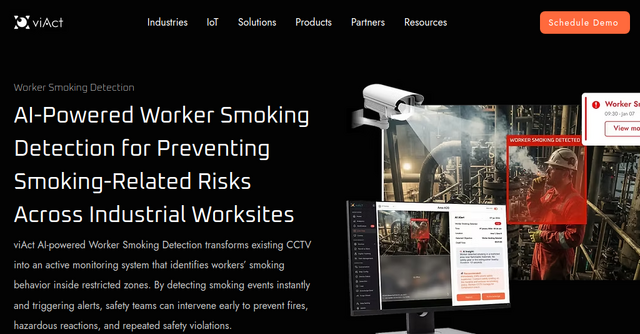
At its core, this SaaS solution is an AI-powered visual analytics tool designed to bridge the gap between policy and reality. Instead of requiring you to install expensive new hardware or overhaul your existing security setup, it plugs directly into your current CCTV system.
The AI processes live video feeds to identify smoking behavior in real-time. Whether a worker is hiding behind a container, taking a forbidden break in a poorly ventilated equipment room, or lighting up near flammable materials, the system detects the action immediately.
It isn't just about catching someone in the act; it’s about enabling EHS (Environment, Health, and Safety) teams to intervene before a fire starts. For industrial site managers, this is a massive shift from reactive, after-the-fact disciplinary actions to proactive risk mitigation.
Why Industrial Sites Struggle with Smoking Enforcement
If you’ve ever managed a worksite, you know that smoking violations rarely happen in the middle of the yard. They happen in the "blind spots."
The challenge isn't usually a lack of signage or lack of training. It’s the practical limitations of human monitoring. Here is why traditional methods often fail:
- The Night Shift Gap: Supervision is almost always thinner during night shifts, making it the prime time for unauthorized behavior.
- Concealed Activity: Workers often retreat behind machinery, structural elements, or shipping containers to avoid detection.
- Dynamic Environments: On construction sites, the layout changes daily. It is nearly impossible to keep up with patrols in an area that is constantly evolving.
- The "Minor Act" Bias: It is easy for a worker to dismiss a quick smoke as a personal choice, failing to realize the severity of the hazard when they are standing near gas cylinders or chemical handling zones.
By utilizing Worker Smoking Detection, you remove the "luck" factor from your safety plan. The AI doesn't get tired, it doesn't blink, and it doesn't look the other way.
Key Features That Matter
What makes this specific SaaS tool stand out in the industrial tech market? It’s the focus on actionable intelligence rather than just "recording."
1. Existing Infrastructure Integration
One of the biggest hurdles for any site manager is the cost of new hardware. This system leverages the CCTV cameras you already have. You aren't ripping out old systems; you are upgrading them with an AI brain. This keeps deployment costs low and operational disruption at a minimum.
2. Real-Time Alerting
The moment the AI identifies a smoking incident, the safety team is notified. This speed is critical. If a worker is smoking in a high-risk flammable zone, seconds matter. Early intervention prevents the escalation of fire risks and keeps the environment safe for everyone.
3. Precision in Complex Environments
Industrial sites are notoriously difficult for standard computer vision. They are often dusty, have low-light conditions, or feature complex, moving machinery. The viAct AI is purpose-built to handle these nuances, ensuring that the detection remains reliable even in challenging, dynamic work zones.
4. Centralized Visibility
Data is only as good as your ability to use it. The platform provides event logging and centralized reporting. This is vital for EHS teams who need to identify recurring behavioral patterns. If a specific area of your site sees frequent violations, you know exactly where to increase signage, lighting, or physical barriers.
Real-World Use Cases: Where It Fits Best
You might be wondering if your specific site needs this level of oversight. If your operations involve any of the following, the answer is likely yes:
- Oil, Gas, and Chemical Facilities: These are the environments where the margin for error is zero. Smoking near volatile materials is a catastrophic risk. AI monitoring provides the 24/7 vigilance required to maintain a zero-incident record.
- Power Plants and Utilities: With high-voltage equipment and fuel systems, these facilities are ignition-sensitive. Using Worker Smoking Detection reduces the need for constant manual patrols, allowing your team to focus on critical maintenance rather than policing smoking zones.
- Construction Sites: Because these sites are temporary and chaotic in nature, traditional security is often ineffective. AI-based detection is portable and adaptable, providing a consistent safety blanket as the site layout shifts.
A Proactive Approach to Safety Culture
The goal of this technology isn't to create a "Big Brother" environment—it’s to enforce a safety culture that protects everyone’s livelihood. When you automate the detection of smoking, you are essentially telling your team that safety is a priority that is being actively managed.
By reducing the normalization of unsafe behaviors, companies can significantly lower the risk of "latent" fire hazards. Often, an incident occurs not because of a grand failure, but because of a series of small, repeated violations that went unnoticed until it was too late.
Final Thoughts for Site Managers
For those of us building or managing products in the industrial space, we understand that "software" isn't just code; it’s a tool to solve physical-world problems. The viAct Worker Smoking Detection module is a prime example of how SaaS can provide tangible, high-value outcomes in the industrial sector.
If you are looking to cut down on fire risks, improve your regulatory compliance, and move away from the stress of manual monitoring, it is time to look at how AI can do the heavy lifting for you.
Ready to secure your worksite? Stop waiting for an incident to happen. Protect your assets and your team by digitizing your safety protocols.
Book a demo of the Worker Smoking Detection solution here and see how it fits into your existing infrastructure.